




 6/23/2026 7:54:32 AM
 323
323Fruit flavors are at the heart of spring and summer beverage innovation. When consumers choose warm-season drinks, they often look for juicy aroma, bright color, natural sweetness, and a sense of energy. This makes fruit profiles especially important for beverage manufacturers developing seasonal products, limited editions, or new market launches.
However, not all fruit flavors work the same way. Some bring softness and familiarity. Some create tropical excitement. Some add floral elegance. Others contribute strong acidity or help improve sweetness perception in reduced-sugar formulations. Understanding these differences helps brands choose flavor profiles that fit the product format, target market, and desired sensory experience.
Below are five fruity beverage flavor profiles with strong potential for spring and summer applications, from fruit tea and juice drinks to dairy beverages, plant-based drinks, sparkling beverages, and functional refreshment products.
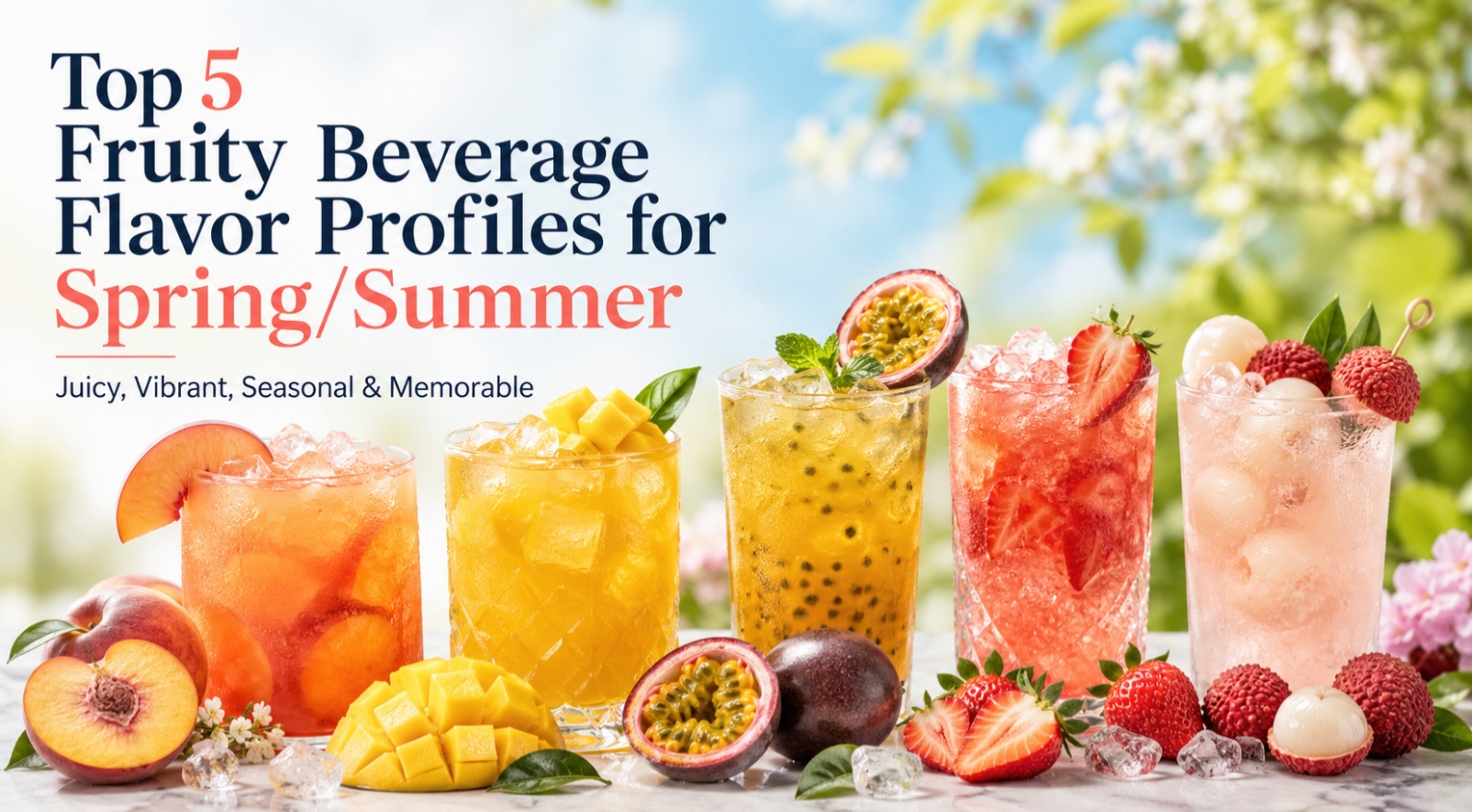
1. Peach: Soft, Juicy, and Emotionally Familiar
Peach is one of the most versatile fruit flavors for spring and summer beverages. It offers a soft, juicy, and naturally sweet aroma that feels both refreshing and comforting. Unlike very sharp citrus or bold tropical fruits, peach has a smoother character, making it suitable for both light refreshment and creamy beverage systems.
One of the strengths of peach is its flexibility. White peach can create a delicate and premium impression, often with a slightly floral note. Yellow peach feels more ripe, juicy, and familiar. Peach nectar gives a fuller sweetness, while peach tea creates a more mature and balanced beverage profile.
Peach works particularly well in iced tea, fruit drinks, dairy beverages, plant-based drinks, sparkling beverages, and flavored water. In tea applications, peach can soften bitterness and add a gentle fruit aroma. In dairy or plant-based drinks, it can create a smooth and friendly taste profile. In sparkling beverages, peach can feel light and juicy when supported by citrus or floral notes.
Peach with oolong tea, jasmine tea, mango, yogurt, or lemon can create very different product directions. This makes peach a valuable flavor for brands that want a familiar taste but still need room for creativity.
2. Mango: Tropical Sweetness with Broad Market Appeal
Mango is one of the most powerful tropical flavors in beverage development. It brings richness, color impression, sweetness, and a sunny tropical character. Because mango is widely accepted across many markets, it is a safe but exciting option for spring and summer products.
From a sensory perspective, mango can add body and sweetness perception. This is useful in reduced-sugar drinks, where the beverage may need a richer aroma to compensate for lower sugar content. Mango can also make a product feel more indulgent without moving fully into dessert territory.
Mango performs well in juice drinks, smoothies, dairy beverages, plant-based drinks, powdered beverage mixes, and functional drinks. It can be used as a single flavor, but it is often more dynamic in blends. Mango with passion fruit creates a bold tropical profile. Mango with coconut moves toward a creamy island-style direction. Mango with orange adds citrus brightness, while mango with yogurt creates a smooth and refreshing beverage concept.
For beverage brands, mango offers strong visual and sensory value. It can make a drink feel colorful, energetic, and highly seasonal.
3. Passion Fruit: Bright, Tangy, and Instantly Recognizable
Passion fruit is a highly expressive tropical flavor. It has strong acidity, a distinctive aroma, and a bold sour-sweet balance. In beverage development, passion fruit is useful when a product needs to feel bright, energetic, and memorable.
Unlike softer fruit flavors, passion fruit has strong character. It can quickly define the personality of a drink. This makes it especially suitable for sparkling beverages, energy drinks, fruit tea, juice drinks, functional beverages, and cocktail-style non-alcoholic products.
Passion fruit is also valuable in low-sugar beverages because its strong aroma and acidity can help improve overall taste impact. When sweetness is reduced, passion fruit can keep the beverage lively and prevent it from feeling dull.
In blends, passion fruit is highly effective. Passion fruit with mango is a classic tropical combination. Passion fruit with lime creates a sharper and more refreshing profile. Passion fruit with pineapple gives a juicy tropical punch, while passion fruit with green tea balances strong fruitiness with a lighter tea base. Passion fruit with guava creates a fuller and more exotic drink profile.
For spring and summer innovation, passion fruit is ideal for brands that want a beverage to feel bold, colorful, and full of energy.
4. Strawberry: Familiar, Friendly, and Highly Adaptable
Strawberry is one of the most widely recognized fruit flavors in the beverage industry. Its biggest advantage is consumer familiarity. It can be used across many product categories and age groups, from children’s drinks to premium dairy beverages and plant-based products.
But strawberry is not a single flavor style. A fresh strawberry profile feels light, juicy, and seasonal. Strawberry jam is fuller and sweeter. Strawberry cream works well in dairy or dessert-style products. Strawberry yogurt-style flavor is suitable for fermented and better-for-you beverage concepts.
For spring and summer, a fresher strawberry direction is often more suitable than a heavy jammy profile. It gives the beverage a lighter and more natural impression. Strawberry can be used in dairy drinks, yogurt beverages, plant-based milk drinks, smoothies, juice drinks, sparkling beverages, and powdered beverage mixes.
Pairing can also change the personality of strawberry. Strawberry with lemon feels brighter. Strawberry with mint becomes more refreshing. Strawberry with yogurt is creamy and familiar. Strawberry with watermelon creates a juicy summer profile. Strawberry with hibiscus adds botanical acidity and a more sophisticated color impression.
For brands looking for broad acceptance, strawberry remains one of the most reliable fruit profiles.
5. Lychee: Floral, Juicy, and Elegant
Lychee brings a different kind of fruit experience. It is juicy and sweet, but also delicate, floral, and elegant. Unlike mango or passion fruit, lychee does not create a heavy tropical impression. Instead, it offers a lighter and more refined fruit character.
This makes lychee especially suitable for premium beverages, fruit tea, sparkling drinks, juice beverages, functional drinks, and Asian-inspired product concepts. It is particularly strong in tea-based beverages, where its floral aroma can complement jasmine tea, green tea, oolong tea, or white tea.
Lychee can help a beverage feel modern and sophisticated without becoming too intense. Lychee with jasmine tea creates a fragrant and elegant drink. Lychee with rose moves toward a floral premium profile. Lychee with yuzu adds citrus brightness. Lychee with white peach creates a soft, juicy, and refined flavor. Lychee with coconut can bring a light tropical creaminess.
For beverage brands targeting consumers who enjoy gentle sweetness, floral notes, and premium fruit profiles, lychee is a strong spring and summer option.
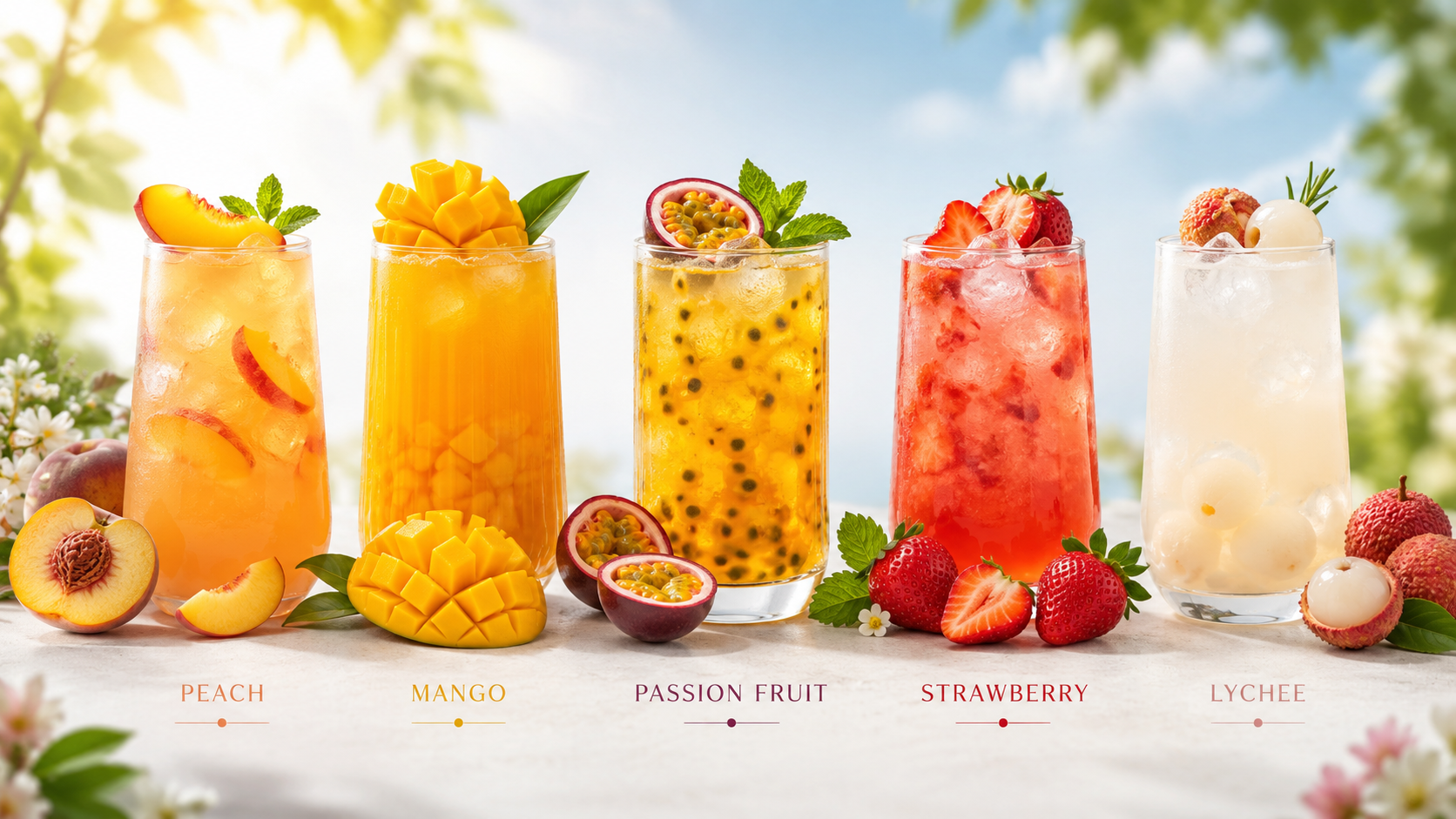
Understanding Fruity Beverage Flavor Design
Fruit flavor development is not only about choosing popular fruits. A successful fruit beverage must consider how the flavor behaves in the product system. The same strawberry or mango flavor may perform very differently in sparkling water, dairy drinks, plant-based beverages, tea drinks, or powdered products.
In clear beverages, fruit flavors need bright top notes and clean aftertaste. In dairy drinks, they need roundness and compatibility with milk or yogurt notes. In plant-based beverages, they may also need to balance cereal, nutty, or beany notes. In tea drinks, fruit flavor must work with bitterness, tannins, and tea aroma. In powdered beverages, flavor stability during storage and reconstitution becomes important.
A well-designed fruit beverage usually has more than one aroma layer. The top note gives the first impression. The middle note builds juiciness and body. The finish determines whether the drink feels clean, heavy, natural, or artificial. For spring and summer, a clean finish is especially important because consumers usually prefer drinks that remain refreshing after repeated consumption.
Conclusion
Fruity beverage profiles are central to spring and summer product development. Peach brings softness and familiarity. Mango adds tropical sweetness and broad market appeal. Passion fruit creates bold acidity and energy. Strawberry offers familiarity and versatility. Lychee brings floral elegance and premium appeal.
For beverage manufacturers, the real value lies in understanding the application behind the flavor. A good fruit flavor should not only smell attractive from the bottle. It should perform well in the final beverage, match the product base, remain stable during processing and storage, and create a pleasant drinking experience.
When fruit flavor design is done well, a beverage can feel seasonal, refreshing, and memorable—exactly what consumers look for during spring and summer.