




 6/16/2026 9:37:33 AM
 370
370Spring and summer are the seasons when beverage consumers naturally look for freshness. As the temperature rises, people tend to prefer drinks that feel clean, bright, cooling, and easy to drink. For beverage manufacturers, this seasonal shift is not only about choosing popular fruit names. It is about understanding how flavor, acidity, sweetness, aroma release, and mouthfeel work together in a finished beverage.
A successful warm-season beverage flavor should create an immediate refreshing impression. It should be light enough for repeated drinking, but distinctive enough to stand out in a crowded beverage market. This is why citrus, tea, botanical, and water-rich fruit profiles continue to play an important role in spring and summer product development.
Below are five refreshing flavor profiles that are especially suitable for sparkling water, fruit tea, sports drinks, low-sugar beverages, functional drinks, and ready-to-drink refreshment products.
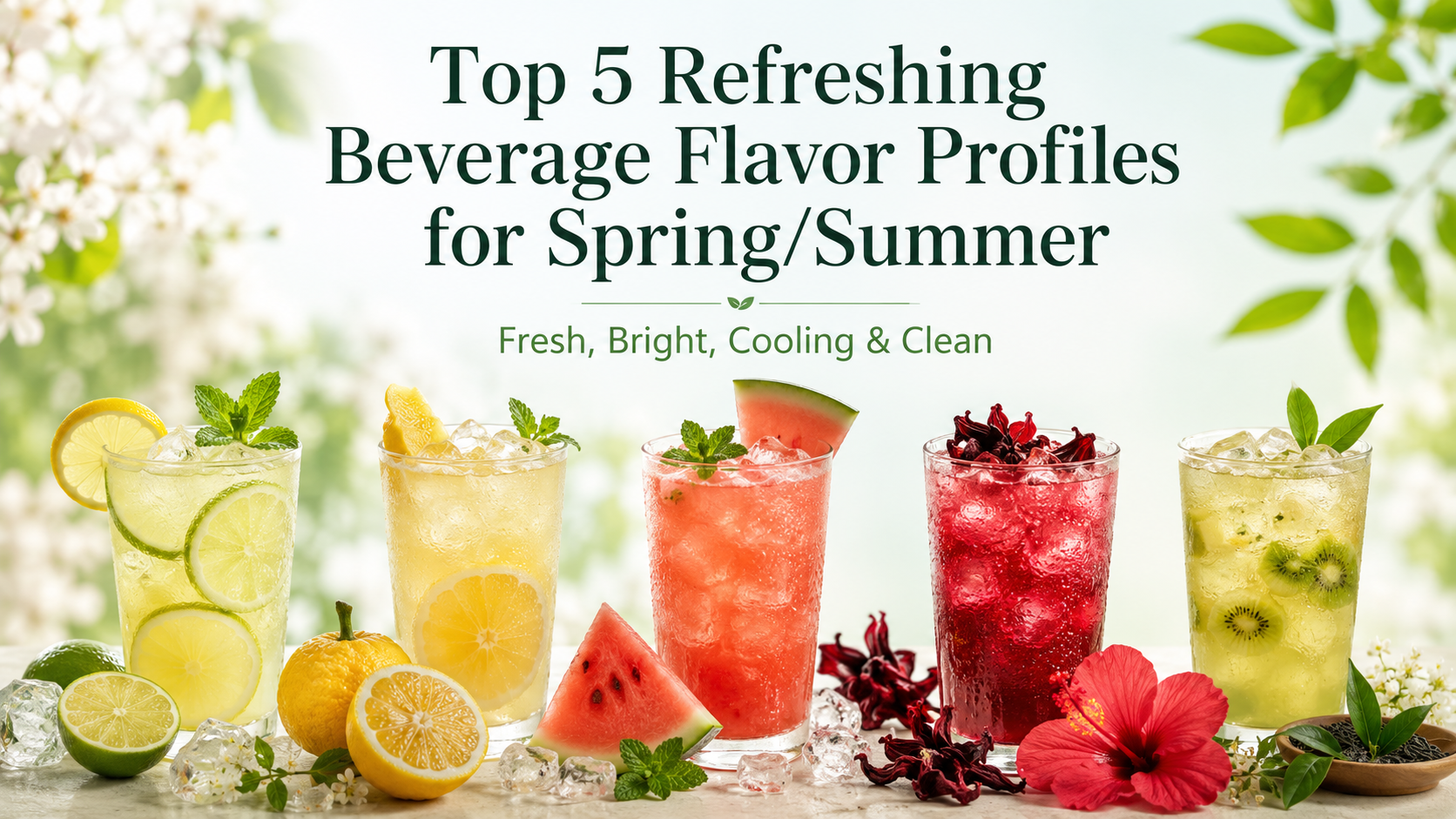
1. Lemon & Lime: The Foundation of Refreshment
Lemon and lime are classic spring and summer beverage flavors because they deliver exactly what consumers expect from a refreshing drink: bright aroma, clean acidity, and a crisp finish. Their sensory effect is immediate. Even before drinking, citrus aroma can create a feeling of coolness and hydration.
From a formulation perspective, lemon and lime are also very practical. In reduced-sugar or sugar-free beverages, the flavor profile can sometimes become flat because sugar contributes not only sweetness but also body and balance. Citrus flavors help rebuild this balance by adding sharpness and freshness. A well-designed lemon or lime flavor can make a low-sugar drink feel more complete without making it taste heavy.
Lemon and lime perform well in sparkling water, sports drinks, iced tea, juice drinks, functional beverages, and hydration products. They also serve as excellent pairing flavors. Lemon with ginger can create a wellness-inspired profile, lime with cucumber can deliver a clean spa-like direction, and lemon with green tea can bring a lighter, more natural beverage character.
For beverage brands, lemon and lime are not old-fashioned choices. They are foundation flavors that can be modernized through pairing, acidity design, and application-specific formulation.
2. Yuzu: Premium Citrus with Asian Inspiration
Yuzu has become one of the most attractive citrus profiles in modern beverage innovation. Compared with regular lemon or orange, yuzu provides a more complex aroma. It combines citrus brightness with mandarin-like sweetness, grapefruit sharpness, and a subtle floral impression. This makes it both familiar and distinctive.
Yuzu is especially useful for brands that want to create a premium or Asian-inspired beverage concept. It works well in sparkling water, fruit tea, functional beverages, low-sugar drinks, and non-alcoholic cocktail-style beverages. Its flavor identity feels modern, clean, and slightly sophisticated, which makes it popular in products targeting younger consumers and café-style beverage formats.
In application, yuzu can be used as the main flavor or as a bright top note in a blend. Yuzu with honey creates a softer and more comforting taste. Yuzu with green tea feels balanced and refreshing. Yuzu with peach or jasmine can produce a delicate fruit-tea profile, while yuzu with ginger supports a sharper functional beverage concept.
For spring and summer launches, yuzu offers a strong advantage: it gives consumers a citrus experience they already understand, but with a more premium and memorable twist.
3. Watermelon: The Taste of Cooling Hydration
Watermelon is closely linked with summer refreshment. Its flavor is juicy, watery, sweet, and cooling, making it ideal for products that focus on hydration and easy drinkability. Unlike rich tropical fruits, watermelon has a lighter profile, which makes it suitable for beverages designed for frequent consumption.
Watermelon works particularly well in flavored water, sparkling water, sports drinks, juice drinks, low-sugar beverages, and frozen beverage concepts. It creates a smooth cooling impression without strong acidity, which can be valuable for consumers who prefer softer and less sharp drinks.
However, watermelon can be delicate in beverage systems. If used alone, it may sometimes feel too light or fade quickly. Pairing is often the key to making watermelon more expressive. Watermelon with mint enhances the cooling sensation. Watermelon with lime adds acidity and brightness. Watermelon with cucumber creates a clean and elegant refreshment profile. Watermelon with strawberry increases fruitiness and improves consumer familiarity.
For beverage developers, watermelon is a strong seasonal flavor, but it performs best when the overall formula supports its clean and juicy character.
4. Hibiscus: Botanical Acidity with Natural Appeal
Hibiscus has become increasingly valuable in beverage innovation because it offers both taste and visual character. Its tart, berry-like profile brings refreshment, while its deep red color impression gives beverages a natural and attractive appearance.
In spring and summer beverages, hibiscus can help prevent fruit drinks from becoming too sweet. It adds acidity, dryness, and botanical depth, which makes the drinking experience more mature and balanced. This is especially useful in low-sugar beverages, iced teas, sparkling drinks, botanical refreshments, and functional beverages.
Hibiscus also supports the growing interest in botanical and wellness-oriented beverage concepts. It can pair well with raspberry, lemon, strawberry, pomegranate, ginger, and tea bases. Hibiscus with raspberry creates a bright berry-botanical direction. Hibiscus with lemon feels clean and refreshing. Hibiscus with ginger can create a stronger functional or wellness impression.
For brands looking to create a beverage that feels natural, colorful, and slightly sophisticated, hibiscus is one of the most useful botanical flavor directions for warm-season innovation.
5. Green Tea & Fruit Blends: Light, Balanced, and Modern
Green tea is an excellent base for spring and summer beverages because it brings freshness, mild bitterness, and a naturally lighter image. When paired with fruit flavors, green tea can create a drink that feels refreshing without being overly sweet.
Fruit tea concepts are especially suitable for consumers who want flavor complexity but still prefer a clean and balanced beverage. Green tea can act as a bridge between traditional tea culture and modern fruit beverage innovation. It provides structure, while fruit flavors add aroma, sweetness, and seasonal appeal.
Green tea pairs well with lemon, peach, yuzu, lychee, honey, mango, and jasmine. Green tea with lemon is clean and familiar. Green tea with peach is soft and aromatic. Green tea with yuzu feels more premium and modern. Green tea with lychee creates a floral fruit profile, while green tea with honey gives a gentle and balanced sweetness.
In product development, green tea fruit blends require careful balance. Too much tea bitterness may reduce drinkability, while too much fruit sweetness may hide the tea character. The best products usually maintain a clean tea base, a bright fruit aroma, and a pleasant finish.
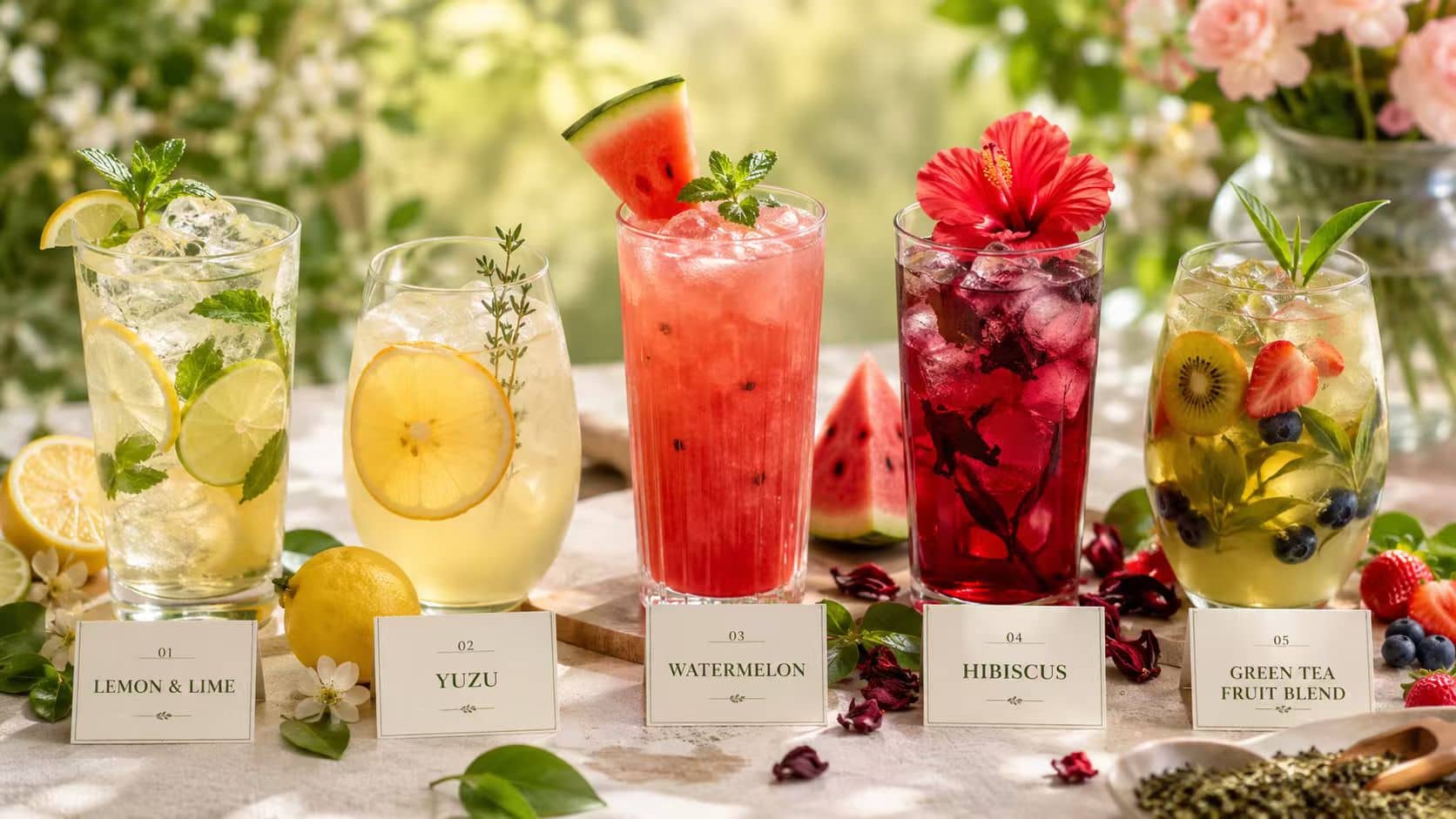
Understanding Refreshment in Beverage Development
Refreshing beverage flavors are not only about acidity or fruitiness. A truly refreshing drink usually has a clear opening aroma, a balanced middle taste, and a clean aftertaste. The first sip should feel bright, but the finish should not be too heavy or sticky.
Different beverage systems also require different flavor approaches. Sparkling water needs clean top notes and good clarity. Sports drinks need freshness, hydration cues, and balance with minerals or electrolytes. Tea beverages need flavor systems that can work with bitterness and tannins. Functional beverages may need masking support for vitamins, minerals, herbal extracts, or other active ingredients.
For spring and summer products, the best flavor profiles are those that remain enjoyable after repeated drinking. Lemon, lime, yuzu, watermelon, hibiscus, and green tea blends are strong options because they can create freshness without overwhelming the product.
Conclusion
Spring and summer beverage innovation is strongly connected to refreshment. Lemon and lime provide classic citrus brightness. Yuzu adds premium citrus complexity. Watermelon delivers cooling hydration. Hibiscus brings botanical acidity and visual appeal. Green tea fruit blends offer balance, freshness, and a modern tea-based direction.
For beverage manufacturers, the real opportunity is to design flavor systems that match the product base, sweetness level, processing conditions, and target consumer preference. A successful refreshing beverage is not only about choosing the right flavor name. It is about creating a complete sensory experience that consumers want to drink again.