




 6/10/2026 10:06:34 AM
 342
342Choosing the right flavor system is one of the most important decisions in food and beverage product development. A flavor may smell excellent in the lab, but if it is not compatible with the final product matrix, it may separate, fade, become cloudy, taste unbalanced, or perform inconsistently during processing and storage.
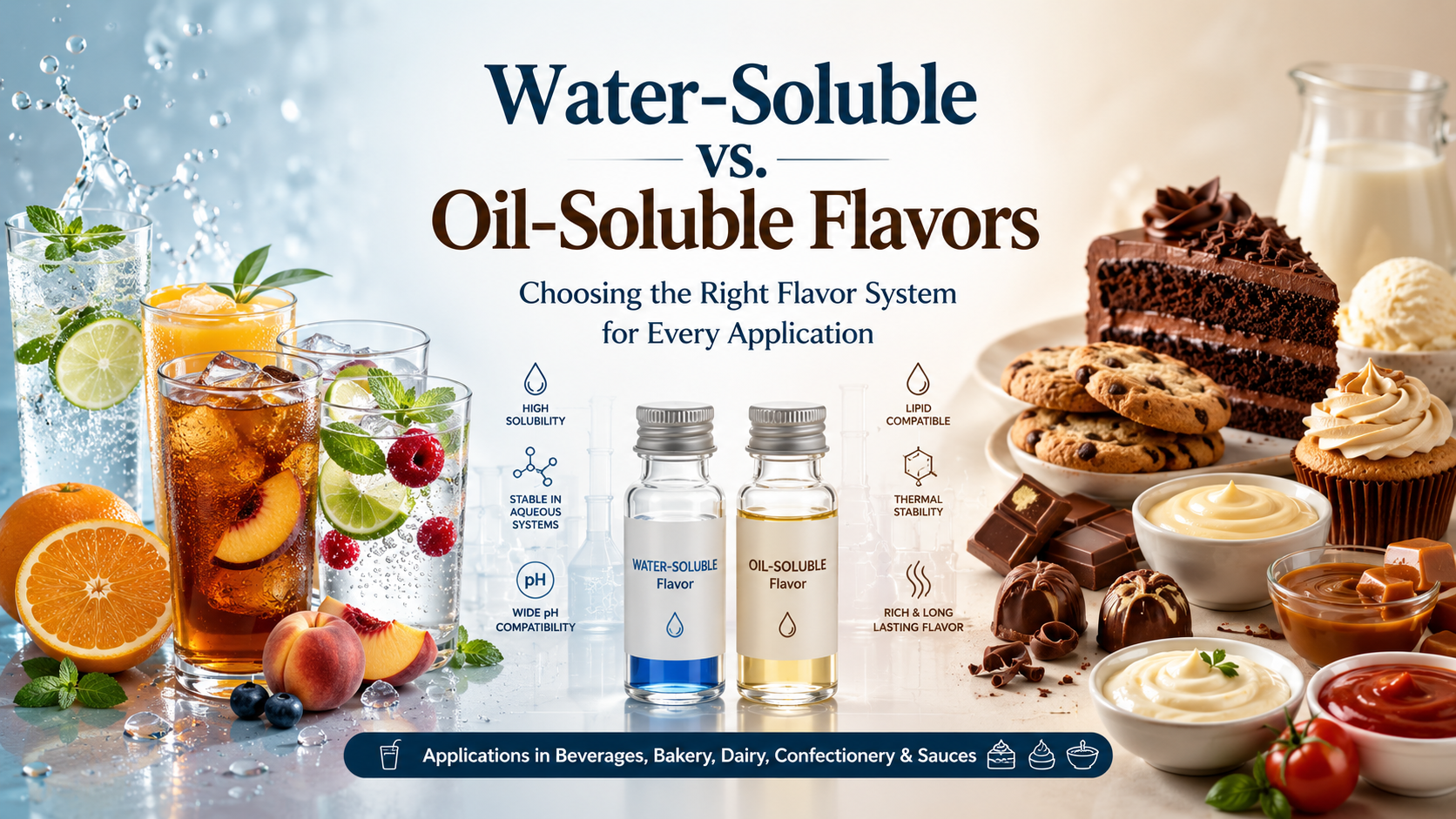
Two of the most common flavor types used in food manufacturing are water-soluble flavors and oil-soluble flavors. They are designed for different product systems and application conditions. Understanding the difference helps R&D teams select the right flavor for beverages, bakery products, dairy products, confectionery, sauces, seasonings, and functional foods.
In this guide, we explain the key differences between water-soluble and oil-soluble flavors, where each type is commonly used, and how beverage and food manufacturers can choose the most suitable flavor system for stable and market-ready products.
1. What Is a Water-Soluble Flavor?
A water-soluble flavor is a flavor system designed to disperse or dissolve in water-based products. It is commonly used in beverages and other products where water is the main phase. These flavors are usually formulated with suitable carriers and solvents that help the aroma compounds perform well in aqueous systems.
Common Applications of Water-Soluble Flavors
1. Carbonated beverages and sparkling water
2. Juice drinks and fruit-flavored beverages
3. Ready-to-drink tea and coffee beverages
4. Dairy drinks and yogurt drinks
5. Plant-based beverages such as oat milk, soy milk, and coconut drinks
6. Energy drinks, sports drinks, and functional beverages
7. Powdered beverage mixes after reconstitution
8. Jellies, syrups, and water-based desserts
Water-soluble flavors are especially important when the final product needs clarity, uniform dispersion, and a clean drinking experience. For example, a lemon flavor used in sparkling water should provide a bright top note without leaving oily droplets or visible separation.
2. What Is an Oil-Soluble Flavor?
An oil-soluble flavor is designed to dissolve or disperse in oil, fat, or lipid-based systems. These flavors are commonly used in products where fat plays a major role in texture, mouthfeel, flavor release, or processing stability.
Common Applications of Oil-Soluble Flavors
1. Bakery products such as cakes, cookies, biscuits, pastries, and fillings
2. Chocolate, compound coating, and fat-based confectionery
3. Cream fillings, whipped toppings, and frosting
4. Ice cream, dairy desserts, and high-fat dairy systems
5. Sauces, dressings, and oil-based condiments
6. Seasoning oils and savory flavor systems
7. Chewing gum, hard candy, and certain confectionery applications
8. Nutritional products containing oils or fats
Oil-soluble flavors are often selected when the product contains a significant fat phase or when the flavor needs to remain stable during heating, baking, or fat-based processing.
3. Key Differences Between Water-Soluble and Oil-Soluble Flavors
Comparison Point | Water-Soluble Flavor | Oil-Soluble Flavor |
Main Compatibility | Water-based systems | Oil- or fat-based systems |
Typical Products | Beverages, syrups, jellies, dairy drinks, plant-based drinks | Bakery, chocolate, creams, oils, sauces, fat-based confectionery |
Appearance Goal | Clear or uniformly dispersed liquid | Stable dispersion in fat or oil |
Flavor Release | Fast aroma impact in drinks and light systems | Longer release in fat-rich products |
Common Challenge | Cloudiness, separation, weak aroma, pH or heat sensitivity | Uneven mixing, flavor loss during heating, fat interaction |
Product Development Focus | Solubility, clarity, pH stability, beverage compatibility | Heat stability, fat compatibility, aroma retention |
The key point is that solubility affects performance. A flavor designed for oil-based systems should not be directly used in a clear beverage unless it is properly emulsified or reformulated. Similarly, a water-soluble flavor may not deliver the desired aroma impact or stability in a high-fat bakery filling.
4. Water-Soluble Flavor Applications in Beverage Manufacturing
Beverages are one of the most important application areas for water-soluble flavors. In beverage development, the flavor must work with sweetness level, acidity, carbonation, tea or coffee base, dairy base, stabilizers, preservatives, and processing conditions.
Important Factors for Beverage Flavor Selection
Clarity: Clear beverages may require flavor systems that do not create haze or oil rings.
PH stability: Fruit drinks, sparkling water, and tea beverages often have acidic conditions.
Heat treatment: Pasteurization or hot filling may affect flavor intensity.
Carbonation: Sparkling beverages need strong top notes that perform well with bubbles.
Sweetness level: Low-sugar beverages may need flavor support to improve sweetness perception.
Shelf life: Flavor should remain stable during storage and distribution.
Typical water-soluble beverage flavors include lemon, orange, grapefruit, yuzu, peach, mango, lychee, strawberry, blueberry, apple, green tea, black tea, coffee, milk tea, cola, and botanical profiles.
5. Oil-Soluble Flavor Applications in Bakery and Confectionery
Oil-soluble flavors are widely used in bakery and confectionery products because many of these products contain butter, vegetable oil, cream, chocolate, or other fat-based ingredients. Fat can carry aroma well, but it can also delay or change flavor release. Therefore, the flavor system should be selected according to the product structure and processing method.
Bakery and Confectionery Flavor Considerations
1. Heat stability during baking or cooking
2. Compatibility with butter, margarine, cream, cocoa butter, or vegetable fat
3. Flavor release after cooling
4. Aroma retention during storage
5. Interaction with sugar, cocoa, dairy solids, starch, and proteins
6. Dosage control to avoid overpowering or artificial notes
Popular oil-soluble flavor profiles include vanilla, butter, milk, cream, chocolate, coffee, coconut, caramel, hazelnut, almond, banana, strawberry, orange, lemon, and savory profiles for sauces or seasonings.
6. When Do You Need an Emulsion Flavor?
Some products require flavors that contain oil-soluble aroma compounds but still need to perform in a water-based system. In these cases, a flavor emulsion may be used. A flavor emulsion is designed to disperse small oil droplets evenly in water with the help of emulsifiers and stabilizers.
Flavor emulsions are commonly used in:
1. Cloudy fruit beverages;
2. Carbonated soft drinks;
3. Juice drinks;
4. Dairy and plant-based beverages;
5. Syrups and beverage concentrates;
6. Products that need a full-bodied mouthfeel or cloudy visual effect;
An emulsion flavor can provide stronger aroma impact and a richer sensory profile, but it must be carefully tested for separation, creaming, ringing, sedimentation, and long-term stability.
7. How to Choose the Right Flavor System
There is no universal flavor type that works for every product. The correct choice depends on the product base, processing conditions, target taste profile, and shelf-life requirements.
Recommended Selection Checklist
1. Is the product mainly water-based, oil-based, or an emulsion system?
2. Does the final product need to be clear, cloudy, creamy, or opaque?
3. Will the product go through heating, baking, pasteurization, UHT, or hot filling?
4. What is the product pH?
5. Does the formula contain dairy, plant protein, fat, alcohol, acids, sweeteners, or stabilizers?
6. Is the product liquid, powder, semi-solid, or fat-based?
7. What shelf life and storage conditions are required?
8. What dosage range and cost target are acceptable?
Before commercial production, the flavor should be tested in the actual application system rather than only evaluated in water or on a smelling strip. Application testing helps avoid problems such as weak flavor, separation, cloudiness, off-notes, and aroma loss.
8. Common Mistakes in Flavor Application
Using an Oil-Soluble Flavor Directly in a Clear Beverage
This may cause oil droplets, surface rings, turbidity, or unstable appearance.
Judging the Flavor Only by Smelling the Bottle
A flavor may smell strong but perform differently in the final product matrix.
Ignoring Processing Temperature
Heat can change aroma intensity and cause volatile components to fade.
Using the Same Flavor Dosage for Every Application
Different bases require different dosage levels and evaluation methods.
Not Testing Shelf-Life Stability
A flavor may taste good on day one but weaken or shift after storage.
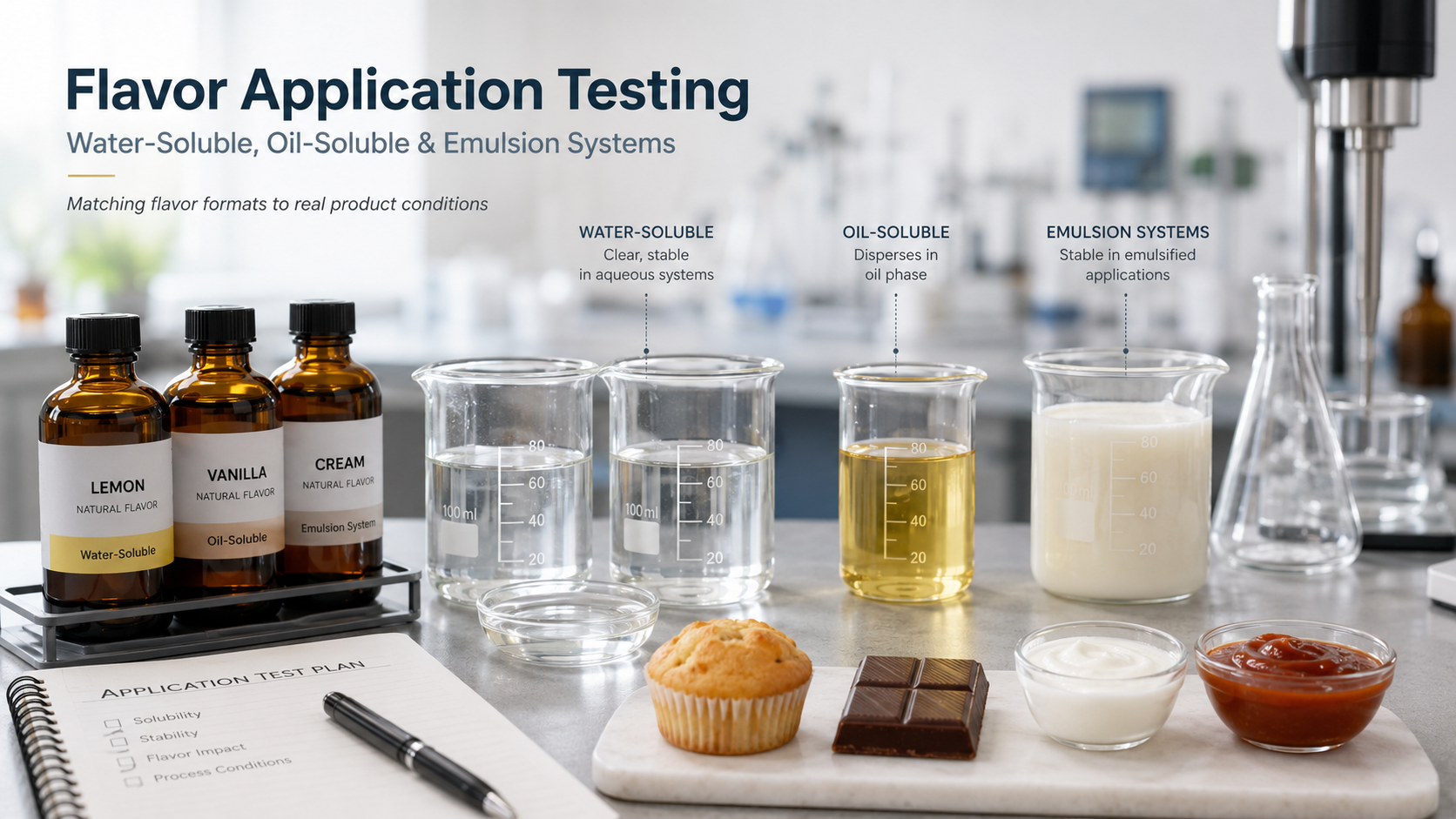
How Liangdun Flavor Supports Custom Flavor Applications
Liangdun Flavor provides water-soluble, oil-soluble, powder, liquid, and emulsion flavor solutions for food and beverage manufacturers. Our R&D and application support can help customers select the most suitable flavor system for different product categories and production conditions.
Our technical support includes:
1. Water-soluble flavor development for beverages and water-based products
2. Oil-soluble flavor development for bakery, confectionery, sauces, and fat-based systems
3. Flavor emulsions for beverage and cloudy drink applications
4. Powder flavor systems for instant drinks, bakery mixes, dairy powders, and nutritional products
5. Flavor matching and customization based on customer samples
6. testing support for stability, taste balance, and dosage optimization
By working with a professional flavor supplier, manufacturers can reduce development risk, improve product consistency, and create flavor profiles that match market demand.
Conclusion
Water-soluble and oil-soluble flavors serve different functions in food and beverage development. Water-soluble flavors are typically used in beverages and water-based applications, while oil-soluble flavors are better suited for fat-based products such as bakery, confectionery, creams, sauces, and seasoning oils.
For successful product development, the flavor system must match the application matrix, processing conditions, appearance requirements, and target sensory profile. Selecting the right flavor type can improve stability, taste performance, shelf life, and consumer acceptance.