




 8/27/2026 12:27:28 AM
 167
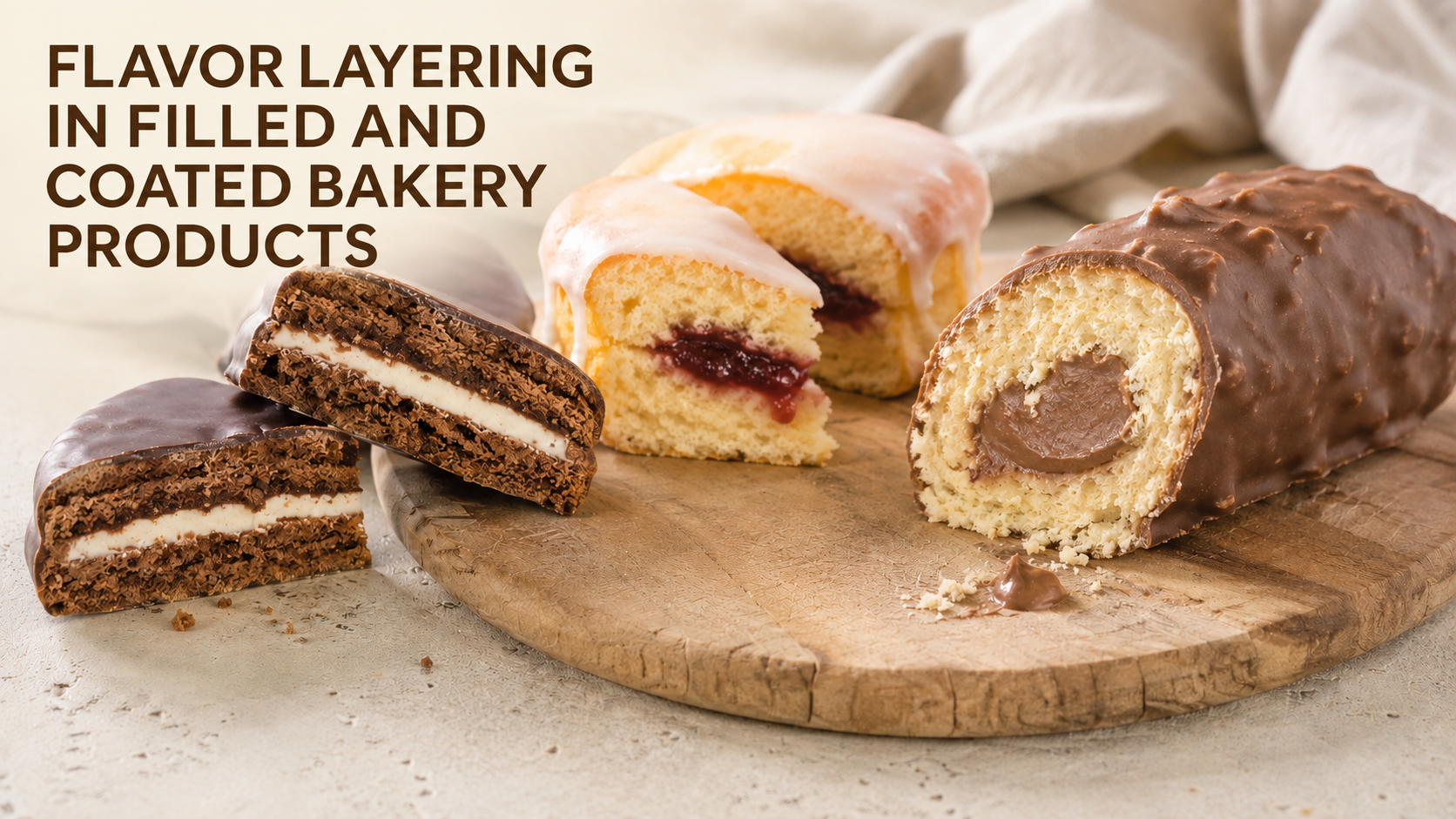
167Filled and coated bakery products are experienced in stages. Before the first bite, consumers notice the aroma and appearance of the outer surface. The coating and crust then create the initial flavor impression. As chewing continues, the filling becomes more prominent and combines with the baked base. Finally, the remaining notes form the aftertaste.
Flavor layering is the process of designing these stages as one complete sensory experience. It does not simply mean adding more flavors or making every component equally intense. The baked base, filling, and coating should each have a clear role while supporting the same overall concept. When the balance is right, familiar profiles such as chocolate, vanilla, milk, caramel, fruit, or nut can feel richer and more complete.
What Flavor Layering Means in Bakery Applications
In a plain cookie or cake, most of the flavor is carried by one food matrix. Filled and coated products are more complex because each layer has a different composition and releases aroma at a different speed. A dry biscuit, a fat-rich cream, and a chocolate-style coating may contain related flavor notes, but they will not deliver them with the same intensity or at the same moment.
Flavor layering therefore has both a physical and a time-based dimension. Flavor is distributed across the base, filling, coating, and inclusions, while these components become noticeable at different stages of eating. The coating often provides the first impact, the filling carries the central character, and the baked base contributes structure, toasted notes, and a longer finish. The objective is a controlled progression in which the main flavor remains recognizable without allowing one layer to overpower the others.
The Baked Base Creates the Foundation
The base is more than a carrier for the filling. Bread, cake, cookies, wafers, and pastries already have their own flavor systems, created by flour, sugar, fat, eggs, milk ingredients, fermentation, and heat processing. Maillard reactions and caramelization add toasted, roasted, nutty, and caramel-like notes that form the background of the finished product.
A light sponge cake provides a soft foundation for fruit, milk, vanilla, or cream profiles. A dark cocoa cookie has stronger roasted and bitter notes, so the filling needs enough body to remain noticeable. Laminated pastry contributes buttery baked notes, while a wafer has a mild flavor but a dry, crisp texture that changes aroma release during chewing.
For this reason, flavor selection should begin with the real baked base rather than treating it as neutral. A filling that tastes balanced on its own may become too weak, sweet, or sharp when combined with the finished product.
Fillings Carry the Main Flavor Identity
In many products, the filling is the most concentrated source of flavor. Cream fillings, fruit preparations, nut pastes, chocolate fillings, custards, cheese-based fillings, and syrups all create different sensory conditions. Their fat content, water content, sugar level, acidity, and texture influence flavor intensity and aroma release.
Fat-rich fillings can retain some aroma compounds and release them gradually, producing a rounder and longer-lasting profile. Delicate top notes, however, may appear less immediate in a high-fat system. Water-based fruit fillings can deliver acidity and bright aromatic notes quickly, but their flavor may change during heating or storage. Dairy-style fillings require careful control of sweetness, creamy body, and cooked or fatty background notes.
The filling often works best when it carries the main flavor message. In a lemon-filled cake, for example, the filling can provide the recognizable lemon character and acidity, while the cake supports it with vanilla and butter notes. Making every layer equally lemon-forward may create a repetitive or overly intense result instead of genuine depth.
Coatings Shape the First Impression
Because coatings sit on the outside, they influence aroma before eating and flavor immediately after the first bite. Chocolate-style coatings, glazes, icing, compound coatings, and yogurt-style or flavored fat-based layers can therefore provide a strong initial signal.
A coating may reinforce the main flavor or create contrast. Chocolate can deepen a cocoa biscuit with nut filling, while a light milk-style coating can soften the acidity of a berry center. Caramel can connect toasted pastry notes with a creamy filling. The correct choice depends on the intended eating sequence.
Coating thickness and melting behavior matter as much as flavor dosage. A thick coating may dominate the first bite and delay perception of the filling. A very thin one may add sweetness and appearance but little recognizable flavor. A fast-melting coating also releases aroma differently from one that remains firm or waxy, so the coating recipe and application rate should be evaluated together.
Harmony, Contrast, and Bridge Notes
Flavor layers can be connected through harmony, contrast, or bridge notes. Harmony uses related notes across several components. A cocoa biscuit, chocolate cream, and chocolate coating can create a unified profile, but each layer still needs a different intensity or tonal character to prevent the product from tasting flat.
Contrast makes the experience more dynamic. Sweetness may be balanced with acidity, roasted notes with creaminess, or rich fat-based components with a brighter fruit flavor. Too much contrast, however, can make the product feel disconnected.
Bridge notes help different components flow together. Vanilla can connect fruit with cream, caramel can link butter with chocolate, and milk notes can soften the transition between a toasted base and a sweet filling. Nutty or roasted notes can connect cocoa, coffee, caramel, and baked dough. These supporting notes may not be obvious by themselves, but they help create a smoother flavor progression.
The Food Matrix Changes Flavor Performance
The same flavor will not perform identically in every layer. Some aroma compounds may be held more strongly in a fat-rich cream or coating, while others behave differently in water-based fruit fillings or syrups. Sugar increases sweetness but may reduce the perception of acidity or delicate aroma. Cocoa, nuts, whole grains, proteins, minerals, and functional ingredients can also add bitterness, astringency, or other background notes.
The pH of a filling affects both flavor perception and stability. Acidic fruit systems usually emphasize brightness, while neutral fat-based systems create a softer, rounder profile. Emulsifiers, dairy solids, cocoa solids, and different fats further influence aroma release and mouthfeel. As a result, transferring the same flavor and dosage from dough into a filling or coating rarely produces an equivalent result. Every layer should be tested in its actual matrix and then in the assembled product.
Processing Determines Where Flavor Should Be Added
Each layer experiences different processing conditions. Flavor added to dough or batter must survive mixing and baking. A filling may be baked with the product, cooked separately, or injected after baking. A coating is normally applied after baking but may still encounter heat during melting, tempering, or enrobing.
These conditions affect the best point of addition. Heat-sensitive top notes may be better preserved in a post-bake filling or coating, while the baked base may require a profile that remains recognizable after thermal processing. Using the layers strategically allows fresh top notes to sit above a stable baked foundation.
Stronger is not always better. If the filling and coating both deliver an intense top note, the result can become sharp or repetitive. Dosage should be adjusted after the components are assembled because a layer that seems balanced alone may behave very differently in the final bite.
Flavor Layers Continue to Interact During Storage
Flavor layering does not stop when production is complete. During storage, moisture and fat can migrate between the base, filling, and coating. A crisp biscuit may soften as it absorbs moisture from the filling, while a cream layer may become firmer. These physical changes affect texture, aroma release, and the order in which flavors are perceived.
Volatile compounds can also move between layers or into the package headspace. Delicate fruit or dairy top notes may fade while cocoa, roasted, and heavier notes remain more noticeable. Oxidation may introduce unwanted notes in products containing nuts, dairy fats, cocoa, or high-fat fillings.
Layered products should therefore be evaluated throughout their intended shelf life, not only on the day of production. The main question is whether the flavor sequence remains balanced as the texture and composition of each layer change over time.
Evaluating the Complete Eating Sequence
Sensory evaluation should follow the same sequence experienced by the consumer. It begins with the aroma released when the package is opened, followed by the flavor and texture of the coating or outer surface. Evaluators then observe when the filling becomes noticeable, how it combines with the base, and what remains in the aftertaste.
The main flavor should be easy to recognize, and the layers should appear in the intended order without one becoming too strong or disappearing. Texture must be assessed at the same time because crispness, softness, creaminess, and melting behavior directly affect flavor release.
Testing individual components helps identify the source of a problem, but final approval should always be based on the assembled product. A filling may taste excellent alone yet become almost invisible between two strongly flavored components. A coating may seem balanced by itself but create excessive sweetness when combined with the complete recipe.
Designing a More Complete Bakery Experience
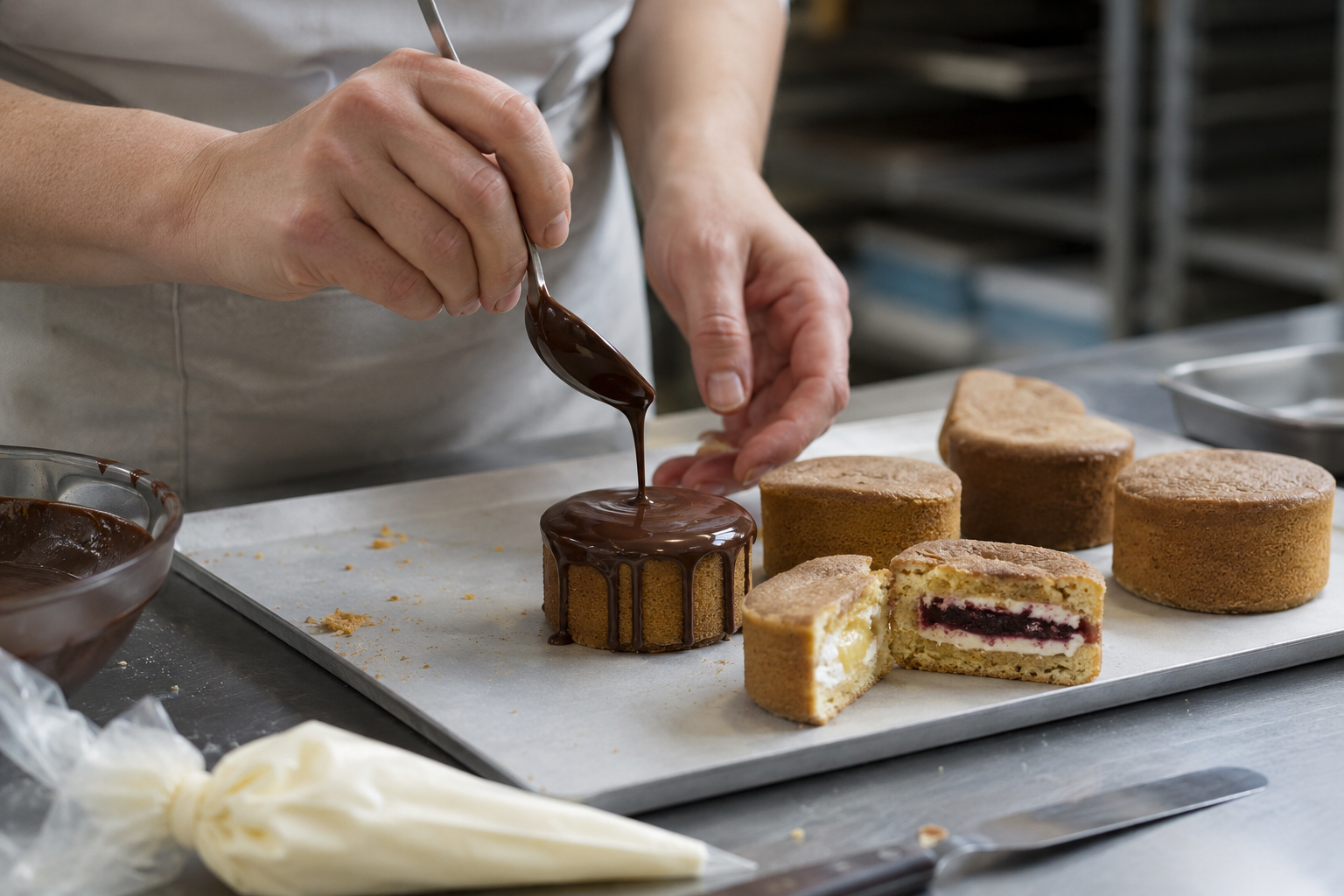
Flavor layering provides a structured way to develop filled and coated bakery products. The baked base establishes the foundation, the filling carries the central identity, and the coating shapes the first impression. Harmony, contrast, and bridge notes connect these components into a clear sensory journey.
Successful layering depends on more than choosing compatible flavor names. The composition of each matrix, processing temperature, point of addition, layer thickness, texture, packaging, and storage conditions all influence the result. By testing every layer individually and then evaluating the assembled product over time, developers can create a richer profile without making it confusing or overpowering.
Liangdun Food Flavors supports bakery manufacturers with application-based flavor solutions for doughs, cakes, cookies, wafers, pastries, fillings, and coatings. Developing and evaluating flavors in the actual product system can help create a more balanced experience from the first aroma to the final aftertaste.