




 7/6/2026 8:39:07 AM
 320
320In modern beverage development, flavor is no longer a simple additive that only provides taste or aroma. It is a carefully designed system that must work in harmony with the product’s base, processing conditions, stability requirements, and consumer expectations.
A beverage flavor system determines not only how a drink smells and tastes, but also how it behaves during production, how it survives processing, and how it performs throughout shelf life. Understanding how flavor systems work helps beverage manufacturers make better decisions in product development and avoid common formulation problems such as flavor loss, instability, off-notes, or inconsistent taste.
Whether the product is sparkling water, juice drinks, ready-to-drink tea, dairy beverages, plant-based drinks, or functional beverages, the principles behind flavor systems remain similar. The difference lies in how the system is designed for each application.
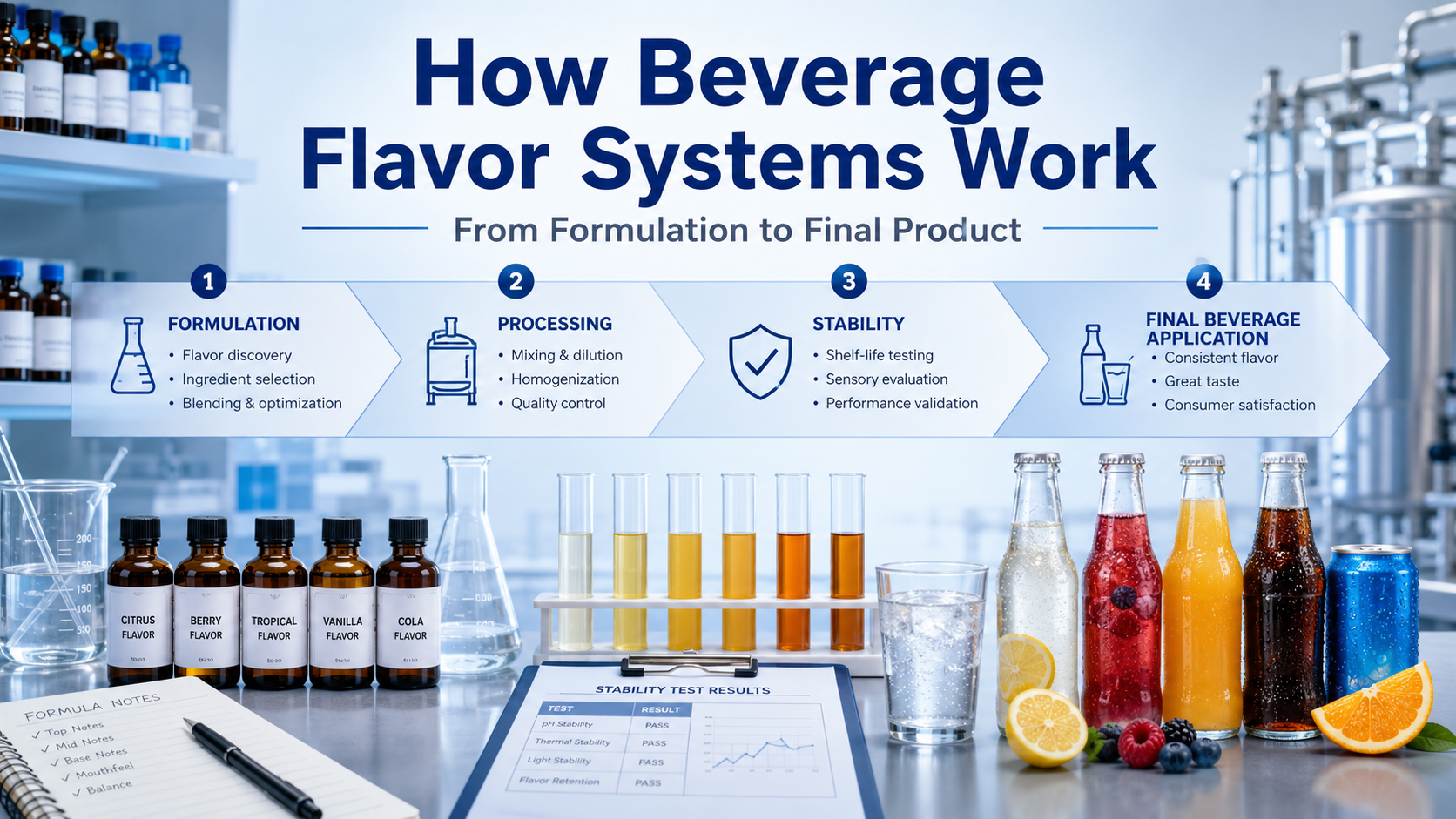
Flavor Is a System, Not a Single Ingredient
A common misunderstanding in beverage development is thinking of flavor as a single component. In reality, a beverage flavor is a system composed of multiple elements working together.
These elements may include aroma compounds, carriers, solvents, emulsifiers (in some systems), stabilizers, and formulation adjustments designed for specific applications. Each component plays a role in ensuring that the flavor performs correctly in water-based, oil-based, or complex beverage matrices.
For example, a citrus flavor used in sparkling water must remain stable in an acidic environment and deliver a clean top note when the beverage is carbonated. A mango flavor used in dairy drinks must be able to integrate with milk fat and protein without losing intensity. A vanilla flavor used in plant-based beverages must be able to mask cereal or beany notes while maintaining smoothness.
This system-based nature of flavor is what makes beverage formulation both technical and creative.
Understanding the Role of the Beverage Base
Every beverage starts with a base, and the base determines how the flavor system should be designed.
Water-based beverages such as sparkling water, flavored water, and sports drinks require clean and highly soluble flavor systems. These flavors must disperse quickly and evenly, without causing cloudiness or separation unless specifically designed as emulsions.
Tea-based beverages introduce additional complexity. Tea contains natural bitterness, tannins, and polyphenols, which can interact with flavor compounds. A successful tea beverage flavor must balance these elements rather than overpower them.
Dairy and plant-based beverages create an entirely different environment. Milk fat, protein, and plant-based solids such as oat, soy, or almond all influence how flavor is perceived. In these systems, flavor must not only provide aroma but also improve mouthfeel and mask undesirable base notes.
Juice beverages and functional drinks often sit in between these systems, requiring careful balance of acidity, sweetness, and aroma strength.
Understanding the beverage base is the first step in designing a successful flavor system.
Water-Soluble, Oil-Soluble, and Emulsion Systems
Flavor systems can generally be categorized into three main types based on solubility and application: water-soluble, oil-soluble, and emulsion-based systems.
Water-soluble flavors are most commonly used in beverages where clarity and clean dispersion are important. They are designed to dissolve evenly in water-based systems and provide a fast, clean aroma release. These flavors are widely used in sparkling water, juice drinks, tea beverages, and functional drinks.
Oil-soluble flavors are used in systems that contain fat or oil components, such as bakery fillings, chocolate, dairy desserts, and certain creamy beverages. In beverage applications, they are often used when a richer mouthfeel or fat-based aroma delivery is required.
Emulsion flavors are used when oil-based aroma compounds need to be integrated into water-based systems. These are especially important for cloudy beverages, juice drinks, and some carbonated soft drinks where a full-bodied flavor profile is desired. Emulsions allow for stronger aroma impact and better mouthfeel, but require careful stability control to avoid separation or creaming.
Each system has its own advantages, and selecting the right one is critical for product success.
How Flavor Behaves During Processing
One of the most important aspects of beverage flavor systems is how they behave during processing. Many beverage products go through heat treatment, carbonation, homogenization, or long storage cycles, all of which can influence flavor performance.
Heat treatment such as pasteurization or UHT processing can cause volatile aroma compounds to evaporate or degrade. This is why heat-stable flavor systems are often required for beverages that undergo thermal processing.
Carbonation introduces another layer of complexity. In sparkling beverages, carbon dioxide enhances aroma release but also changes perception of acidity and sweetness. A well-designed flavor system must account for this interaction to ensure a balanced drinking experience.
Homogenization is particularly important in dairy and emulsion-based beverages. It ensures that flavor droplets are evenly distributed and remain stable over time. Without proper homogenization, separation or flavor inconsistency may occur.
Storage conditions also play a major role. Over time, flavors can fade, oxidize, or shift in character. A good flavor system is designed not only for immediate taste performance but also for long-term stability.
Flavor Performance in the Final Product
The true test of any flavor system is not how it smells in a sample bottle, but how it performs in the final beverage.
In real applications, flavor must interact with sweetness, acidity, texture, and other functional ingredients. It must remain stable under packaging conditions and deliver consistent sensory performance throughout shelf life.
For example, a strawberry flavor in a dairy beverage should feel smooth, natural, and integrated with milk. In a sparkling beverage, the same strawberry profile must feel lighter, brighter, and more refreshing. In a powdered beverage, it must survive drying and reactivation while maintaining aroma strength.
This is why application testing is essential in beverage development. Laboratory evaluation alone is not enough to predict real-world performance.
Customization in Beverage Flavor Systems
Modern beverage development increasingly relies on customization. Brands rarely use standard, off-the-shelf flavors without modification. Instead, they adjust flavor systems to match specific product positioning, regional preferences, and target consumer expectations.
Customization can involve adjusting sweetness perception, modifying fruit ripeness, enhancing freshness, reducing heaviness, or improving aftertaste. It can also involve creating entirely new flavor identities that combine multiple sensory directions.
For example, a mango flavor can be adjusted to feel more tropical or more creamy. A peach flavor can be made lighter for tea applications or richer for dairy beverages. A citrus flavor can be sharpened for sparkling water or softened for functional drinks.
Customization allows beverage brands to differentiate themselves in a competitive market where many products share similar base ingredients.
Why Flavor Development Requires Technical Support
Because beverage flavor systems are influenced by so many variables, technical support is often essential in product development.
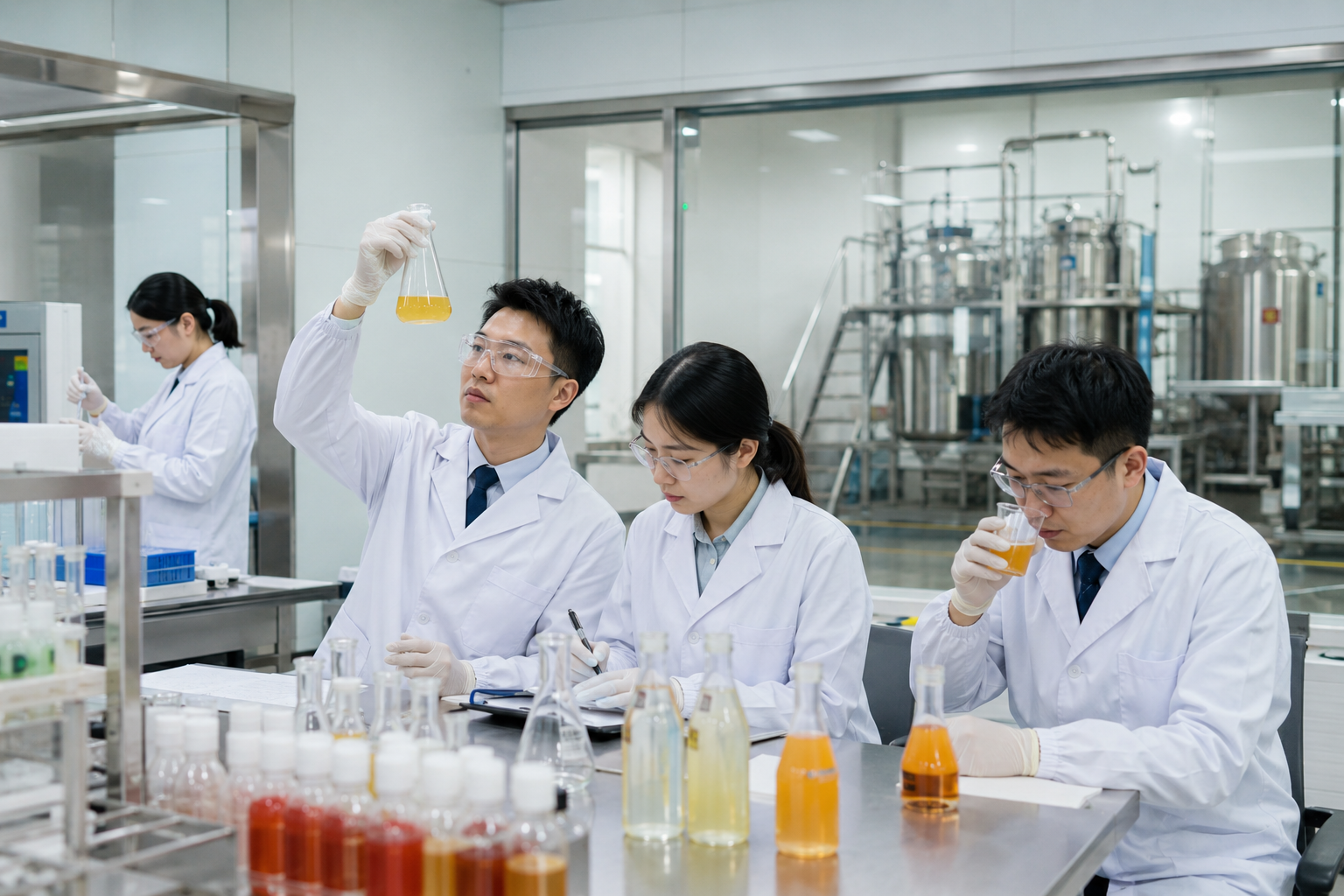
A professional flavor supplier does more than provide samples. It helps interpret application requirements, recommends suitable systems, adjusts formulations, and supports testing under real production conditions.
For beverage manufacturers, this technical collaboration can significantly reduce development time and improve product success rates. It also helps avoid common issues such as weak flavor impact, instability, off-notes, or inconsistent batch performance.
The best results are achieved when flavor suppliers and beverage developers work together as partners rather than in a simple buyer-seller relationship.
Conclusion
Beverage flavor systems are complex, structured, and highly application-dependent. They are not simply ingredients added for taste, but engineered systems designed to perform across formulation, processing, and shelf life.
Understanding how flavor systems work helps beverage manufacturers make better decisions in product development. From selecting the right solubility type to ensuring processing stability and final product performance, every step plays a role in creating a successful beverage.
As the beverage industry continues to evolve toward lower sugar, more functional ingredients, and more diverse flavor profiles, the importance of well-designed flavor systems will continue to grow. Companies that understand and apply these principles will be better positioned to develop competitive, high-quality beverage products in global markets.