




 10/15/2026 2:42:23 AM
 5
5Southeast Asia’s bakery market is entering a stage in which familiar comfort and regional identity are becoming increasingly important. Consumers still enjoy the soft texture and creamy aroma associated with milk bread, filled buns, cakes and pastries, but many products now combine these familiar bakery formats with flavors rooted in local dessert culture.
For bakery manufacturers, this creates opportunities beyond simply making products “more milky.” The more relevant direction is to use milk, cream, butter or cheese notes as a flavor foundation, then combine them with pandan, coconut, taro, mango, salted egg yolk or palm sugar.
The following seven profiles are not presented as a sales ranking. Instead, they represent dairy-style bakery flavor directions worth watching in Southeast Asia in 2026, based on regional taste preferences, bakery applications and current product-development signals.
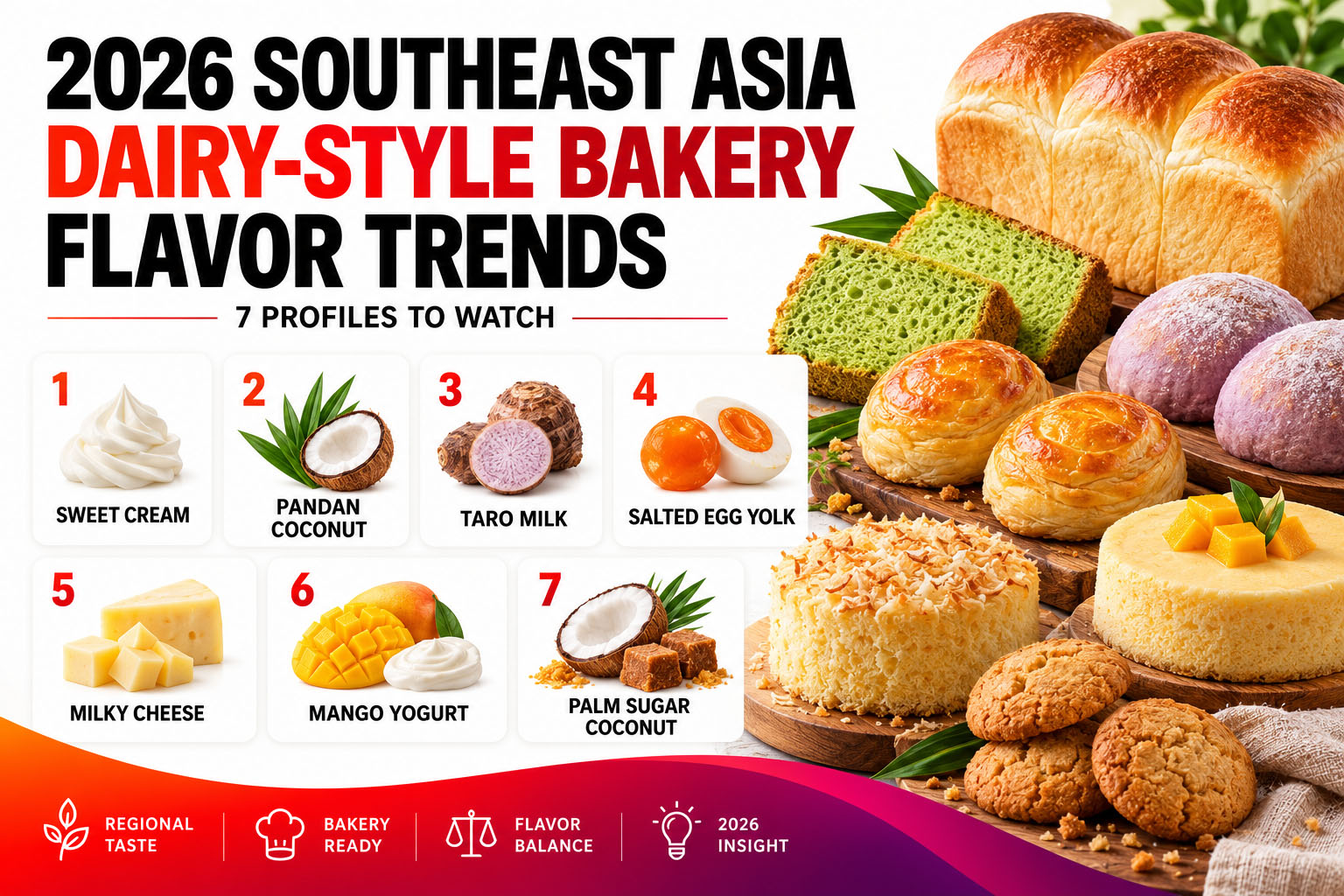
1. Sweet Cream and Condensed Milk
Sweet cream and condensed milk remain accessible flavor profiles because consumers already associate them with softness, richness and comfort. Compared with plain milk flavor, condensed milk offers a sweeter and more concentrated impression, while sweet cream provides a smoother and rounder finish.
These profiles are suitable for milk bread, sandwich bread, filled buns, sponge cakes, Swiss rolls and small packaged cakes. They can also strengthen the perceived richness of products in which the actual dairy content is limited by cost, processing requirements or shelf-life considerations.
The main challenge is balance. If the creamy and sweet notes are too strong, the product can quickly become heavy or artificial. A successful profile should support the baked aroma rather than cover it. Light vanilla, butter or caramel nuances may be used to add depth, while the main milk character remains clean and recognizable.
2. Pandan Coconut Cream
Pandan and coconut are already familiar in desserts across Indonesia, Malaysia, Singapore, Thailand, Vietnam and the Philippines. In bakery products, the combination can provide regional identity without requiring consumers to accept a completely unfamiliar taste.
Pandan contributes green, nutty, vanilla-like and slightly toasted notes. Coconut adds creamy body and a softer tropical character. When a milk or cream note is introduced, the overall profile becomes rounder and easier to apply in modern bakery formats.
Pandan coconut cream works particularly well in chiffon cakes, Swiss rolls, sandwich biscuits, soft buns, wafers and layered cakes. It can also be used in fillings inspired by kaya, provided that the egg, coconut and pandan notes remain balanced.
For packaged products, manufacturers should pay attention to the behavior of pandan during baking and storage. An aroma that performs well in a fresh filling may become weaker in a high-temperature cake or bread process. The flavor system should therefore be evaluated in the final product rather than only in a liquid base.
3. Taro Milk
Taro milk offers a combination of familiarity, gentle sweetness and visual appeal. However, taro flavor can sometimes appear too powdery, earthy or dry when used alone. Adding a soft milk or cream character can make the profile smoother and more suitable for bakery applications.
This direction can be applied to filled bread, mochi bread, cake rolls, sandwich cakes, pies and steamed cakes. It is especially suitable for products positioned as soft, comforting or indulgent snacks.
A well-balanced taro milk profile should not rely entirely on color. The aroma should include a recognizable taro character supported by creamy notes, while avoiding an excessively perfumed or candy-like impression. In filled buns, the taro note may be stronger in the filling, while the surrounding bread uses a lighter milk or butter profile to create contrast.
4. Salted Egg Yolk and Butter
Salted egg yolk continues to offer a distinctive sweet-and-savory experience. In bakery products, it is often paired with butter, milk or cream notes to soften its sulfurous and salty characteristics while strengthening its rich, baked impression.
The profile is suitable for pastries, cookies, filled buns, egg yolk cakes, crackers and layered products. It can range from a clearly savory salted egg yolk flavor to a softer egg yolk custard style, depending on the target market and application.
The technical difficulty lies in controlling the balance among egg yolk, butter, saltiness and baked notes. Too much egg character can create an unpleasant sulfurous impression, while excessive butter flavor may hide the salted egg yolk identity. A more natural result usually comes from layering moderate egg yolk, butter and roasted notes instead of relying on one dominant aroma.
For products with fillings or coatings, manufacturers should also evaluate how oil content affects aroma release. The same flavor system may perform differently in a high-fat filling and in a low-fat cake base.
5. Milky Cheese
Cheese-flavored bakery products do not always need a strong fermented or savory cheese profile. In Southeast Asian sweet bakery, lighter combinations such as milky cheese, cream cheese, cheese milk and sweet cheese can be more versatile.
These profiles work in soft buns, sponge cakes, sandwich biscuits, cookies, bread coatings and cream fillings. A mild cheese note can provide richness and differentiation while remaining compatible with sweet bakery formats.
The ideal intensity depends on the market. Some products benefit from a clear salty cheese character, while others need only a subtle cheese note behind the milk and butter aroma. For everyday packaged bakery, a smoother milky-cheese direction may offer broader acceptance than an intense aged-cheese profile.
Manufacturers can also combine milky cheese with corn, coconut, butter or egg yolk to create profiles that feel familiar but still provide a new sensory experience.
6. Mango Yogurt Cream
Mango is widely recognized throughout Southeast Asia, but a simple sweet mango profile can become heavy in rich bakery products. Pairing mango with yogurt or light cream introduces acidity and freshness, helping reduce the perception of excessive sweetness.
Mango yogurt cream is suitable for cake fillings, Swiss rolls, sandwich cakes, soft buns and chilled bakery products. It can also be used in shelf-stable fillings when the formulation and flavor system are developed for the required processing conditions.
The mango character should match the intended positioning. A ripe, pulpy mango profile creates a rich tropical impression, while a brighter mango with yogurt acidity feels lighter and more refreshing. In either case, the dairy note should connect the fruit character with the cake or bread base rather than dominate it.
Heat processing is particularly important for fruit-and-dairy combinations. Top notes that smell bright before baking may lose impact after heating, so manufacturers should assess aroma retention, sweetness and acidity after production and throughout the expected shelf life.
7. Palm Sugar Coconut Milk
Palm sugar coconut milk provides a regional alternative to ordinary caramel cream. Palm sugar contributes dark caramel, cooked sugar and slightly smoky nuances, while coconut milk adds smoothness and tropical familiarity.
This profile can be applied to cakes, cookies, soft buns, pastries, sandwich biscuits and coconut fillings. It is especially useful for manufacturers looking to create a Southeast Asian identity without relying on an unfamiliar product format.
The flavor should avoid becoming too burnt or syrupy. A moderate palm sugar note combined with coconut milk, butter or toasted bakery aromas can produce a richer and more layered result. Small amounts of pandan may also be used, but the formulation should maintain a clear main flavor rather than combining too many competing notes.
What These Trends Mean for Bakery Development
Across these seven directions, the strongest opportunity is not simply intense flavor. It is the combination of a familiar bakery foundation with a recognizable regional element.
Milk, cream, butter and cheese notes provide comfort and help connect local flavors with widely consumed formats such as bread, cake, cookies and filled pastries. Pandan, coconut, taro, mango, salted egg yolk and palm sugar provide differentiation and cultural relevance.
In many Southeast Asian markets, a flavor does not need to be extremely strong to be recognizable. Softer and more balanced profiles may be more suitable for frequently consumed products, while richer combinations can be reserved for premium or limited-edition bakery lines.
From Trend Inspiration to a Stable Bakery Product
The growth of regional flavor concepts does not mean manufacturers need to reproduce traditional desserts exactly. A more practical approach is to identify the key sensory characteristics of those desserts and adapt them to scalable bakery formats.
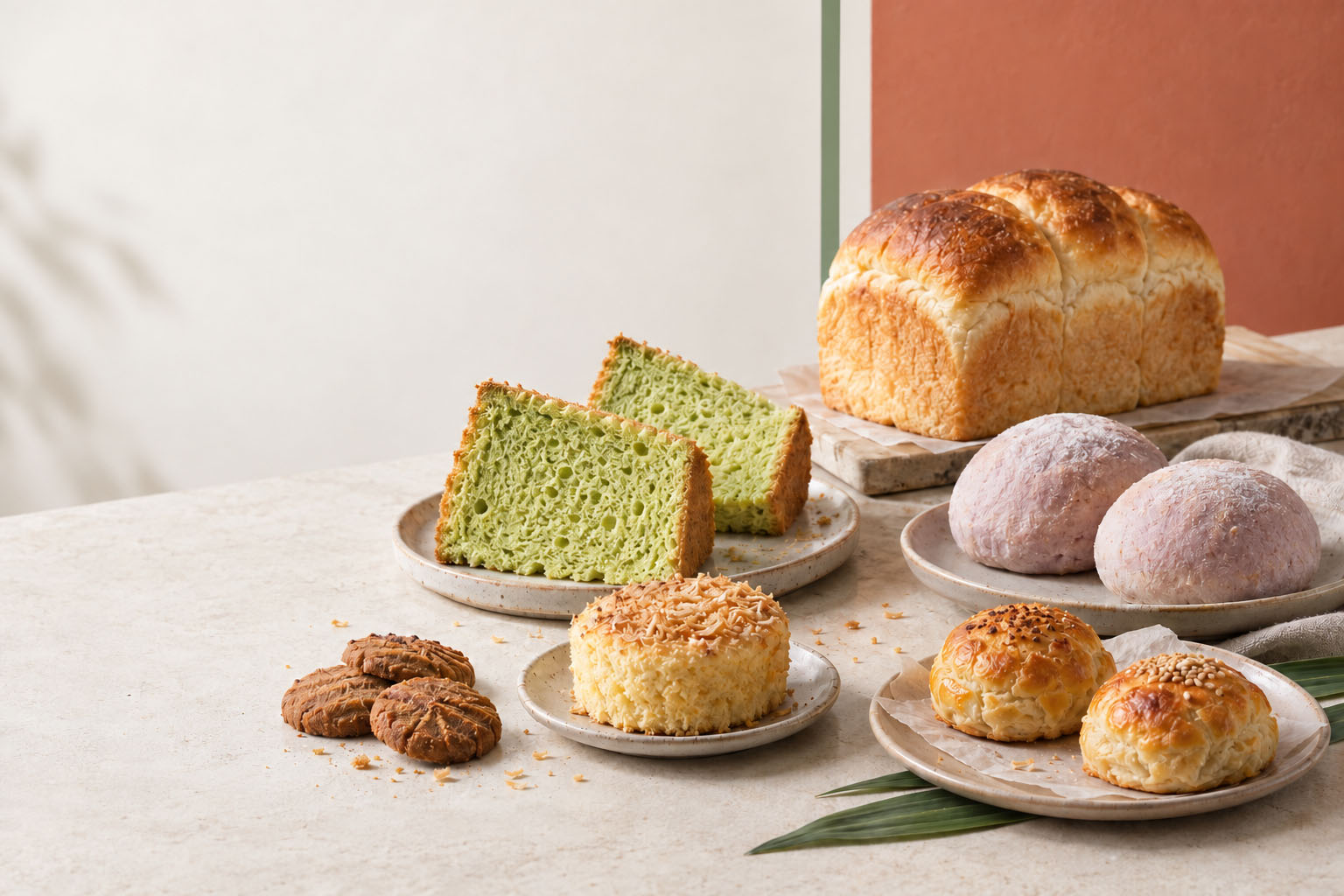
For example, pandan coconut can become a chiffon cake or cream-filled bun. Taro milk can be used in a soft bread filling. Salted egg yolk butter can be adapted for cookies or pastries. Palm sugar coconut milk can become a cake, biscuit or layered filling.
The objective is to preserve enough regional identity for the flavor to feel authentic and recognizable, while ensuring that it remains stable, cost-appropriate and suitable for industrial production.
At Liangdun, we develop food flavor solutions for bread, cakes, cookies, fillings and other bakery applications. By adjusting dairy notes, regional flavor characteristics and aroma performance for different processing conditions, manufacturers can move from an interesting trend concept to a repeatable finished product.
As Southeast Asia’s bakery category continues to combine global formats with local taste traditions, dairy-style flavor systems will remain an important platform for innovation—not only by adding richness, but by helping familiar regional flavors enter new bakery applications.